

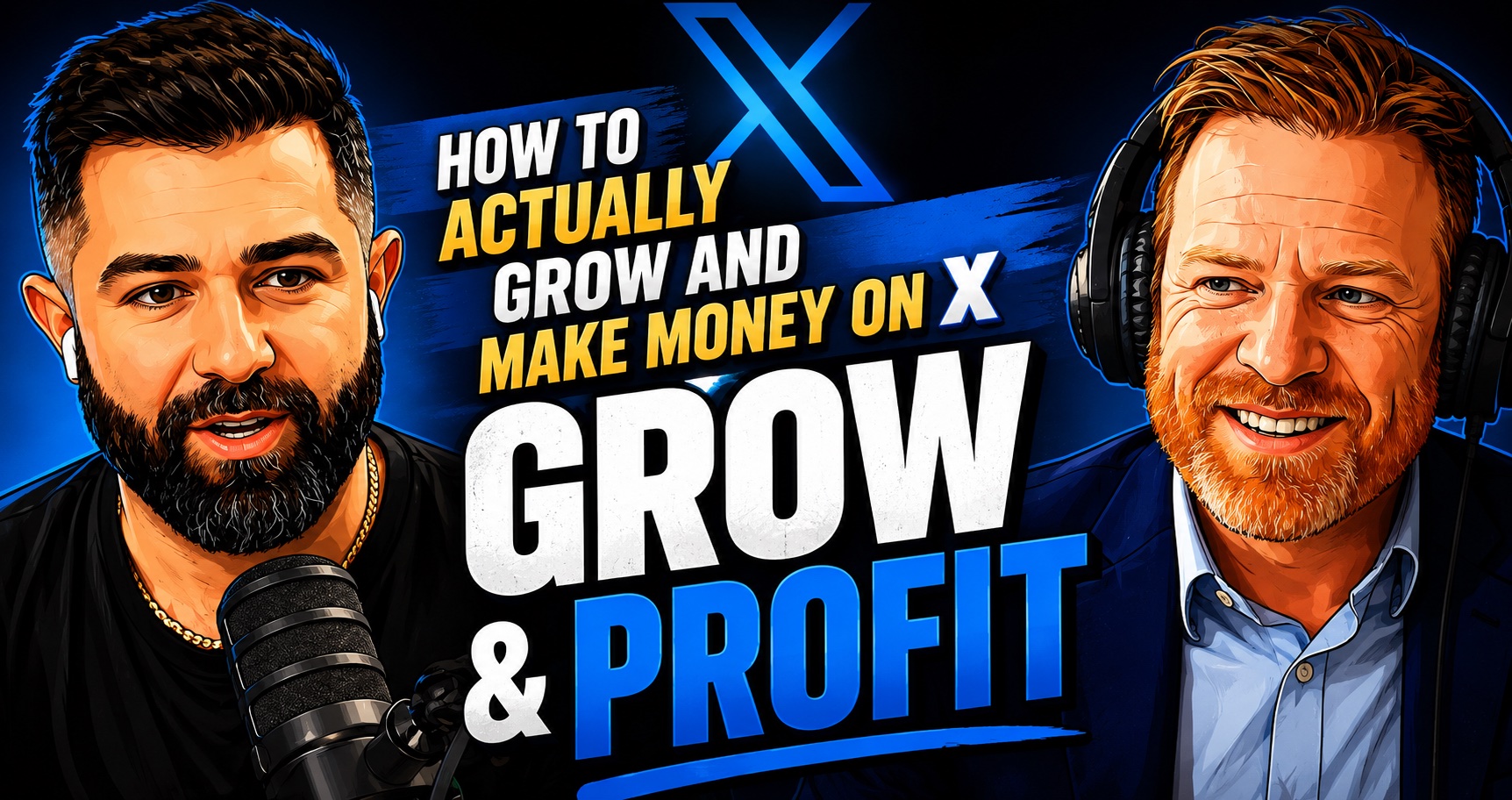
Growing on X can look simple from the outside.
Post frequently. Reply to people. Build an audience. Join the creator program. Eventually, turn that activity into revenue.
In practice, there’s a significant difference between generating impressions and building a presence that creates meaningful relationships and business opportunities.
That was the focus when marketing strategist and E&I Creative founder Anthony Gaenzle joined Joshua Mihail Palassis on The Connector podcast. Palassis invited Gaenzle onto the show to discuss how creators, entrepreneurs, and professionals can grow on X, strengthen their personal brands, and turn visibility into something more valuable than a large impression count.
The conversation included practical guidance on audience growth, profile development, engagement, monetization, content variety, and the patience required to make the platform work.
Table of Contents
Getting Attention From the Wrong People Doesn’t Help Much
Gaenzle has been active on the platform since 2012, long before Twitter became X and before the creator program made impressions financially valuable.
When that program launched, the platform quickly filled with repetitive questions, engagement bait, and posts created primarily to generate activity. Gaenzle experimented with broader content while working toward the program’s eligibility requirements.
One humorous reply about a photograph of a hunter holding a bear generated approximately 700,000 impressions. It helped move him closer to approval, but it also reached an audience that had little connection to his work in marketing and personal branding.
The experience demonstrated why a high number alone can be misleading.
“None of them were in my target audience,” Gaenzle explained. “I’m not selling to any of those people.”
Once the initial threshold was reached, the more important work began. That required answering a different set of questions:
Who should the account attract?
What should the content be known for?
What can the creator genuinely help people understand or accomplish?
Posting for a specific audience may produce fewer impressions at first. But it creates a much stronger foundation than drawing large numbers of people who have no reason to remain connected.
Growth Happens in the Conversations
Posting consistently is important on X, but publishing alone is rarely enough.
Much of the platform’s value comes from joining relevant conversations and giving people a reason to recognize the person behind the profile.
Gaenzle advised creators to place less emphasis on chasing impressions and more emphasis on the quality of their interactions.
“Don’t worry about impressions, focus more on the conversations,” he said.
That doesn’t mean leaving hundreds of brief replies such as “Great post” or “I agree.” While those comments may increase activity, they add little to the discussion and reveal almost nothing about the person posting them.
A useful reply should contribute a perspective, example, question, or idea that moves the conversation forward.
“Your comments and replies should be almost like posts that could stand on their own,” Gaenzle explained.
That approach helps a creator become visible without forcing attention. Someone may first encounter the person through a thoughtful reply, visit the profile, and then discover a larger body of useful content.
Over time, those small interactions build familiarity. Find your voice on X and thrive.
Don’t Polish the Personality Out of Every Post
A content strategy can help creators remain consistent, but not every post needs to begin on a content calendar.
Gaenzle noted that some of his strongest posts have developed naturally while he was working on something else. A client project may lead to an observation worth sharing. He posts the idea, returns to work, and later discovers that the unplanned thought created a significant conversation.
“Sometimes those unpolished posts are the better posts,” he said.
Unpolished doesn’t have to mean careless.
It can simply mean the idea still sounds like something a real person would say. It hasn’t been expanded into a long thread, loaded with unnecessary lessons, or rewritten until every trace of personality disappears.
Good content often begins with paying attention.
Notice the question that keeps coming up. Share the lesson from the project that didn’t go as planned. Explain a decision while the reasoning is still fresh. Those moments can create more meaningful posts than forcing an idea because the schedule says it’s time to publish.
Give People More Than One Reason to Follow
A professional account doesn’t have to function like a digital brochure.
During the episode, Palassis walked through his own feed, which included business advice, videos, personal observations, health-related posts, and lighter moments from his everyday life.
Gaenzle encouraged him to continue mixing formats and subjects rather than narrowing the feed until it felt impersonal.
“I highly recommend posting videos of yourself, being yourself,” he said. “People want to connect with their personality.”
Expertise gives people a reason to value the content.
Personality gives them a reason to care who created it.
That doesn’t require sharing every part of life online or forcing personal stories into unrelated business lessons. It simply means allowing the account to reflect a recognizable human being.
Short observations, longer educational posts, videos, photographs, professional insights, and occasional personal moments can all have a place when they fit naturally.
The variety also keeps the account from becoming predictable. When every post follows the same formula, even good advice can start to feel repetitive.
Your Profile Should Continue the Story
A strong post may persuade someone to click on a profile.
What happens next matters.
Palassis and Gaenzle discussed how profile photographs, banners, bios, featured posts, and calls to action work together. A visitor should be able to quickly understand who the creator is, what subjects they discuss, and where the visitor can learn more.
The same general identity should also be recognizable across platforms.
That doesn’t mean an X profile must look exactly like a LinkedIn or YouTube page. The tone and featured offer may change slightly depending on the audience. But the experience should feel connected enough that someone knows they’ve found the right person.
As Gaenzle noted while reviewing Palassis’s channels, visitors could move from his YouTube page to LinkedIn and X and still immediately recognize the same brand.
Consistency supports trust.
It also makes the attention generated by individual posts more useful because visitors have a clear next step rather than landing on a confusing or disconnected profile.
Monetization Takes Longer Than Approval
Qualifying for a creator program can feel like the finish line.
It’s usually closer to the beginning.
Gaenzle was approved relatively quickly, but meaningful earnings didn’t immediately follow. For roughly six months, the payments were either small or below the required threshold. It took closer to 12 to 15 months before the results reached a point where the continued investment of time felt clearly worthwhile.
That timeline is important because creators often abandon a platform before their strategy has enough time to develop.
They may post for several weeks, see limited growth, and assume the opportunity isn’t there. But building a relevant audience requires time to develop a recognizable voice, learn which ideas connect, establish relationships, and become familiar to people in the right community.
Follower count also doesn’t determine the full value of an account.
Gaenzle pointed out that accounts with smaller, highly targeted audiences can generate more engagement than profiles with much larger but less connected followings.
The goal isn’t simply to collect followers.
It’s to attract people who understand why the content matters.
Build Beyond the Platform
Creator payments can become one source of revenue, but they aren’t the only way X can produce value.
An active presence can support consulting services, books, newsletters, communities, partnerships, job opportunities, and other business goals.
When someone has followed a person’s content for several months, they’ve already seen how that person thinks. They’ve observed the quality of the advice, the way the creator interacts with others, and whether the personality behind the account feels credible.
That familiarity can make a future business conversation much easier.
However, Gaenzle also cautioned against relying entirely on one platform. At the end of the discussion, he encouraged creators to connect X with a broader ecosystem that may include a website, newsletter, community, products, and services.
“Don’t just rely on X, make it a sort of an ecosystem,” he said.
Platforms can introduce an audience.
A stronger ecosystem gives that audience somewhere to go next.
Grow Strategically, but Keep It Enjoyable
Growth on X requires real effort.
Creators need to post, participate in conversations, respond to people, test ideas, review what works, and remain active long enough for relationships to develop.
But the strategy shouldn’t make the account feel like another character the creator has to play.
Gaenzle closed the conversation with a reminder that is easy to overlook when analytics, algorithms, and monetization become the primary focus:
“Just have fun. That’s the key. Let your personality shine.”
The strongest X strategy isn’t necessarily the one that produces the most activity in the shortest period.
It’s the one that helps the right people recognize a genuine voice, enter a useful conversation, and continue paying attention.

e&i creative is a full-service marketing agency headquartered in Lancaster, Pennsylvania, and serving both B2B and B2C clients across multiple states and regions. The agency offers web design, marketing strategy, social media marketing, graphic design, content marketing, SEO, video production, blogging, and copywriting services.




One Response
I vibe with every tip here.
X works for chatters who target one specific audience. For me, this means sharing blogging tips all day long to draw folks to my blogging tips themed blog. But posting content is not enough; especially on X. Engaging people genuinely is highly critical on that platform.
Anthony, you really are one of the top engagement folks on the entire site. You walk your talk like few on X. The results back it up.