

Your online presence often creates an impression before you ever speak with a potential client, employer, collaborator, or business partner.
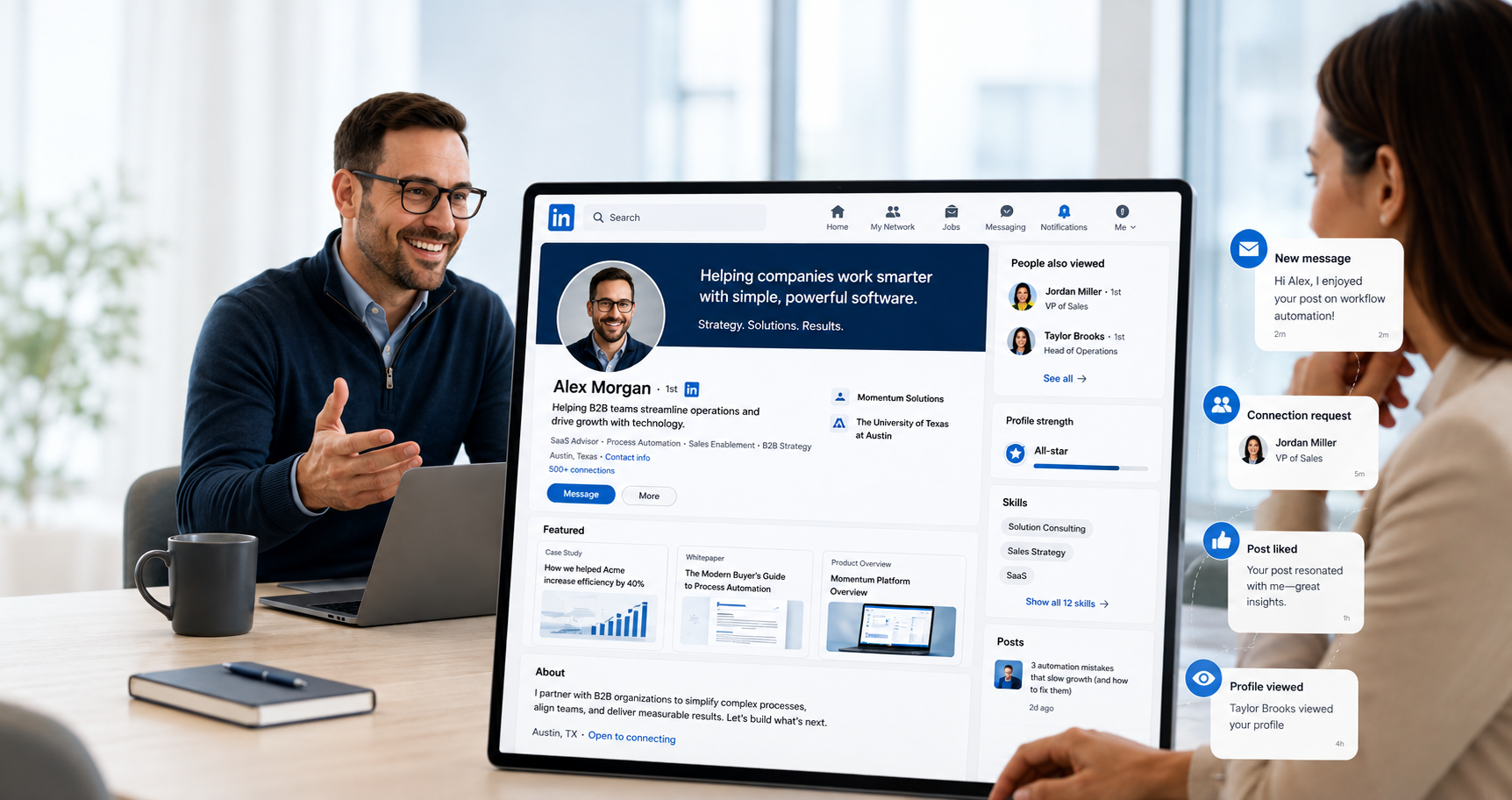
For entrepreneurs and creators, LinkedIn has become much more than a place to list job titles and occasionally congratulate someone on a promotion. It can serve as your professional landing page, content platform, networking hub, portfolio, and credibility engine.
LinkedIn reported more than 1.3 billion members in 2026, along with continued growth in original posts and knowledge-oriented conversations. That creates a significant opportunity, but it also means you have more competition for attention. Simply creating a profile and filling in the required fields won’t be enough to make you stand out.
The goal is to build a LinkedIn presence that quickly tells people who you are, what you understand, whom you help, and why they should trust you.
Your personal brand is ultimately your reputation. It’s the story people tell themselves about your experience, values, credibility, and ability to create results. When your LinkedIn profile doesn’t communicate that story clearly, people are left to form their own conclusions.
A thoughtfully optimized profile helps you take ownership of that narrative.
Table of Contents
Why LinkedIn Still Matters for Your Personal Brand
LinkedIn remains one of the most important professional networking platforms because it combines discovery, credibility, publishing, and relationship-building in one place.
Your profile may appear when someone researches your name after reading one of your articles, hearing you on a podcast, receiving a referral, or seeing one of your social media posts. That person may only spend a few seconds deciding whether to keep reading.
Your profile should make those seconds count.
For entrepreneurs, consultants, and freelancers, LinkedIn can help prospective clients understand the services you offer and the problems you solve. For creators, it can reinforce your expertise beyond a single post or platform. For employees and executives, it can support speaking opportunities, partnerships, recruiting conversations, and career growth.
LinkedIn also plays an increasingly important role in how professional content is discovered. The platform reported in 2026 that original LinkedIn posts, articles, and newsletters are frequently surfaced by AI-powered search and discovery tools. That gives entrepreneurs and creators another reason to publish useful, original insights tied to their real expertise.
Your profile and your content now work together. One creates the initial impression. The other gives people a reason to remember you.
Treat Your Profile Like a Landing Page, Not a Resume
A traditional resume is designed to document what you have done.
An optimized LinkedIn profile should also explain why that experience matters to the person viewing it.
Before editing individual sections, decide what you want your profile to accomplish. Are you trying to attract consulting clients, speaking invitations, podcast appearances, partnerships, job opportunities, newsletter subscribers, or an audience for your content?
You may have several goals, but one or two should take priority.
That goal should guide the language you use, the work you feature, and the call to action you place throughout the profile. Someone who lands on your page shouldn’t have to piece together five unrelated job descriptions to understand how you can help them.
Optimize Your Headline Around Value and Relevance
Your headline is one of the first things people see, and it follows you into search results, comments, connection requests, and other areas of LinkedIn.
Using only your current job title wastes valuable space.
A stronger headline combines your role, area of expertise, audience, and the value you create. It can include important keywords, but it should still sound natural and human.
Instead of:
“Marketing Consultant”
You could write:
“Marketing Strategist Helping B2B Brands Build Authority, Generate Demand, and Turn Content Into Growth”
A creator might use:
“B2B Creator and Podcast Host Exploring Leadership, Marketing, and Sustainable Business Growth”
The goal isn’t to cram every skill you have into one line. It’s to make your relevance obvious.
Avoid vague phrases such as “results-driven professional,” “visionary leader,” or “passionate innovator” unless you immediately explain what those terms mean in practice. Almost anyone can claim them, so they do little to differentiate you.
Use language your audience would recognize and potentially search for. Then give that language some personality so the headline still sounds like you.
Make Your Profile Photo and Banner Work Together
Your profile photo should be recent, recognizable, and appropriate for the way you present yourself professionally.
It doesn’t necessarily need to look formal. A creator, founder, and corporate executive may each choose a different visual style. What matters is that the image feels intentional and makes it easy for someone who has met you online or in person to recognize you.
Your banner image gives you more room to communicate.
Instead of leaving the default background in place, use the banner to reinforce your positioning. It might feature your business, newsletter, podcast, book, speaking topic, primary service, or a concise statement about the audience you help.
Keep the design clean. LinkedIn places your profile image and interface elements over portions of the banner, and the layout may display differently on mobile devices. Important wording should remain readable without filling every available inch.
Your photo, banner, headline, and opening About text should feel like parts of the same story.
Rewrite Your About Section for the Reader
The About section shouldn’t be a long biography written only from your point of view.
It should connect your experience to the needs of the person reading it.
Start with a strong opening that explains what you do or the problem you help solve. LinkedIn may initially show only the beginning of the section, so don’t bury your most important point several paragraphs down.
From there, explain how you approach your work, the experience that informs it, and the outcomes you help create. You can include personal context and personality, but the reader should leave with a clear understanding of your professional value.
Write in the first person. Third-person biographies often feel distant on a personal profile, especially when every other part of LinkedIn is designed around direct interaction.
Your About section can also include relevant specialties and keywords, but they should appear naturally within the copy. A block of disconnected terms may help you mention more phrases, but it rarely persuades a real person to contact you.
End with direction. Tell readers what they can do next, whether that’s visiting your website, subscribing to your newsletter, reviewing your work, or sending you a message about a particular type of project.
Turn Your Experience Section Into Proof
Many LinkedIn profiles treat the Experience section like a collection of copied-and-pasted job descriptions.
That tells people what you were responsible for, but not necessarily what you accomplished.
For each meaningful role, explain the scope of your work, the audience or organization you served, and the impact you created. Add relevant numbers where they provide useful context, but don’t force metrics into every sentence.
An entrepreneur might discuss the types of clients served, markets entered, campaigns led, or systems developed.
A creator might highlight audience growth, newsletter reach, partnerships, media appearances, successful content programs, or communities built.
A leader might explain changes implemented, teams developed, revenue influenced, efficiencies gained, or strategic initiatives launched.
You can also add media or links to certain profile sections when the feature is available. This allows you to support your claims with presentations, project examples, interviews, articles, or other tangible evidence.
Your Experience section should reinforce the same positioning introduced in your headline and About section. It shouldn’t feel like an unrelated archive of everything you have ever done.
A personal brand audit can help you identify places where your LinkedIn profile and the rest of your online presence are telling inconsistent stories.
Use the Featured Section as a Curated Portfolio
The Featured section remains one of the most valuable areas of a LinkedIn profile because it lets you choose what visitors see rather than relying on your most recent activity.
You can use it to showcase LinkedIn posts, articles, external links, videos, documents, presentations, interviews, case studies, and other examples of your work.
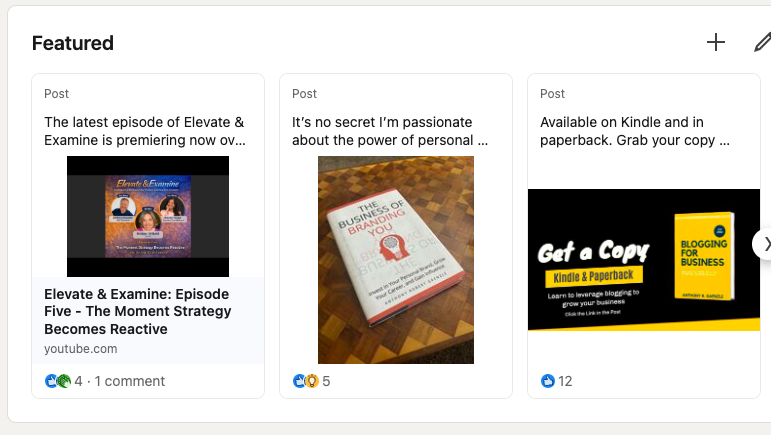
Here’s an example using my Featured section as it was organized at the time of publishing this article. You can see I highlight my latest podcast and showcase two of my books.
Don’t add everything.
Choose a small collection that supports the action you want visitors to take. Someone should be able to scan the section and quickly find evidence that you understand your subject.
An entrepreneur might feature a case study, service page, client result, podcast interview, and lead magnet.
A creator might highlight a strong article, newsletter, video, popular post, speaking appearance, or original research.
Review this section regularly. An old article with outdated advice or a promotion for an event that happened two years ago can make an otherwise active profile feel neglected.
Also be aware that LinkedIn continues to adjust access to certain profile features. Some expanded Featured options and custom profile buttons may depend on your subscription, so check what is currently available on your own account before building your strategy around a paid feature.
Publish Original Content That Demonstrates Expertise
Posting regularly is still valuable, but consistency alone isn’t a strategy.
Your content should help people understand how you think.
Share insights from work you are actually doing. Explain lessons from client conversations, business decisions, experiments, mistakes, industry changes, and questions you hear repeatedly.
Original experience is difficult to copy, which makes it one of your strongest sources of content.
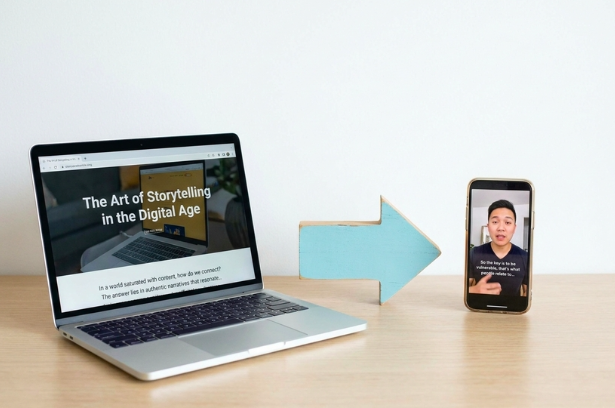
People tend to connect more deeply when you share authentic experiences and honest perspectives rather than publishing content that could have come from anyone.
LinkedIn’s 2026 guidance emphasizes original, useful posts rather than relying heavily on reshares. The platform has also stated that it is working to limit inauthentic engagement, including automated comments and coordinated engagement behavior.
That makes genuine participation more important than shortcuts.
You don’t need to publish every day. A sustainable rhythm of one to three useful posts per week may create more value than daily content produced only to maintain a streak.
Mix formats based on the idea.
A brief observation may work as a text post. A process may be easier to understand as a document or visual. A more complex argument may deserve an article. Recurring educational content may be a good fit for a LinkedIn newsletter.
LinkedIn has continued investing in articles and newsletters, and in 2026 the company specifically highlighted long-form, original content as a way to build authority and improve discovery. Useful depth matters more than stretching every thought into a long article, but substantial ideas deserve enough space to be explained properly.
Build Recognition Instead of Chasing Empty Reach
A post with a large number of views may create attention, but attention isn’t always connected to your goals.
The more useful question is whether the right people are beginning to associate your name with the right topics.
Choose several themes that connect your expertise to your audience’s needs. Return to those themes from different angles rather than switching your identity every time another topic starts trending.
This doesn’t mean repeating the same advice endlessly. It means building a recognizable body of work.
A marketing consultant might consistently discuss positioning, content strategy, demand generation, and leadership. A financial creator might focus on small-business finance, cash flow, pricing, and decision-making. A founder might share lessons about product development, hiring, growth, and operating through uncertainty.
Over time, topical consistency can create familiarity. Familiarity can lead to recognition, and recognition helps create trust.
Use Recommendations, Skills, and Verification to Strengthen Trust
Recommendations still provide useful social proof, particularly when they describe specific work and outcomes.
Ask people who have direct knowledge of your work rather than collecting vague praise from anyone willing to write a paragraph. A detailed recommendation from a client, manager, colleague, partner, or employee is more persuasive than a generic statement that you are “great to work with.”
Make the request easier by reminding the person which project or result they might mention. Don’t write the recommendation for them, but provide enough context that they don’t have to remember every detail from three years ago.
Your Skills section should also reflect where you want your brand to go, not only where it has been. LinkedIn currently allows members to list a large number of skills, but more isn’t automatically better. Prioritize the capabilities most relevant to your positioning and opportunities.
Verification is another feature worth considering in 2026. LinkedIn allows eligible members to verify aspects of their identity, workplace, or education. LinkedIn reported in March 2026 that more than 100 million members had added at least one verification to their profiles.
A verification doesn’t replace a strong body of work, but it can add another trust signal in an environment where fake accounts and AI-generated identities have made credibility more important.
Decide Whether Follow or Connect Supports Your Goal
LinkedIn allows members to choose whether Follow or Connect is the primary action on their profiles.
The right choice depends on how you use the platform.
If your main goal is building an audience around your content, making Follow the primary action may reduce friction for people who want your insights but don’t know you personally.
If your main goal is developing a smaller network based on direct professional relationships, Connect may make more sense.
A connection creates a two-way relationship and allows direct messaging between first-degree connections. Following allows people to see your public posts without joining your network.
Neither is inherently better. Choose the setting that aligns with your broader LinkedIn strategy rather than copying what large creators do.
You also don’t need to be active everywhere. Focus on the channels that best support your goals and audience rather than stretching yourself across every available platform.
Create a Service Page if You Sell Professional Services
LinkedIn Service Pages can be useful for freelancers, consultants, agencies, and other service-based entrepreneurs.
A Service Page lets you list the types of services you provide and gives potential clients another way to discover and contact you through LinkedIn.
This won’t replace a well-built website or a strong sales process. It can, however, create another relevant path for people who are already searching inside the platform.
Use clear service categories, make sure the offering aligns with your headline and About section, and avoid presenting a long list of unrelated capabilities. A tightly positioned offer is often easier to understand and remember.
Some additional service-related profile buttons and visibility features require a Premium subscription, so review LinkedIn’s current plan details before assuming every option is available to all users.
Engage Like a Person, Not a Distribution System
Your profile optimization and content strategy will only go so far if you treat LinkedIn like a one-way publishing platform.
Comment thoughtfully on posts from people in your industry. Respond when people engage with your work. Follow up after events, podcast conversations, meetings, or introductions. Send connection requests when there is a genuine professional reason to connect.
Avoid generic comments written only to create visibility. “Great post” rarely starts a meaningful conversation.
Add an observation, ask a relevant question, or explain how the idea connects to your own experience.
LinkedIn has become more aggressive about limiting inauthentic activity, including engagement pods, automated comments, and other tactics designed to manufacture reach. That is good news for people willing to build relationships the slower, more human way.
You don’t need to network with thousands of people every week. You need to become more intentional about the people and conversations connected to your goals.
Today’s buyers often build familiarity through multiple conversations and touchpoints rather than moving through a perfectly linear journey.
Review Performance and Adjust Your Approach
Optimization is not a one-time profile makeover.
Review which posts lead to relevant profile visits, conversations, subscriptions, inquiries, or opportunities. Look beyond impressions and reactions to determine whether your activity is reaching the people you want to influence.
LinkedIn provides analytics for posts and creator activity, although the exact data available may vary by account type and feature access.
Pay attention to patterns.
Which topics generate thoughtful comments rather than quick reactions?
Which posts lead to direct messages?
Which Featured items receive clicks?
Which profile searches are bringing people to you?
Which types of people are following you?
Use that information to refine your positioning and content. Don’t change your entire strategy after one weak post, but don’t ignore a consistent signal that your message isn’t landing.
Ongoing personal brand coaching can also help entrepreneurs and creators assess their content, clarify their positioning, and adjust their approach over time.
Outdated LinkedIn Tactics to Leave Behind
LinkedIn Stories should no longer appear in a current LinkedIn growth strategy. LinkedIn removed the Stories experience in September 2021.
Creator Mode should also no longer be treated as something users need to switch on. LinkedIn removed the Creator Mode toggle in 2024 while retaining many associated publishing and analytics tools.
Profile hashtags tied to Creator Mode were also removed. Rather than relying on a short list of profile hashtags to define your expertise, communicate your topics clearly throughout your headline, About section, Experience section, skills, and content.
You should also be cautious about older recommendations built around engagement hacks, large batches of automated connection requests, or leaving shallow comments on dozens of posts. Those tactics may create activity, but they can damage trust and put your account at odds with LinkedIn’s push toward authentic conversations.
Build a Profile That Supports the Work You Want Next
A strong LinkedIn profile doesn’t need to make you look impressive to everyone.
It needs to make you relevant to the right people.
Clarify the work you do, the audience you help, and the value you create. Back that positioning with real examples, original ideas, credible recommendations, and consistent participation.
Then keep the profile current as your work evolves.
LinkedIn is no longer just an online résumé. For entrepreneurs and creators, it can be a living record of how you think, what you create, and the problems you are capable of solving.
Make sure the story it tells is the one you want people to remember.

Anthony is Founder and Chief Growth & Strategy Officer for E&I Creative. He is a two-time published author and digital marketing influencer. He has helped brands both large and small grow and thrive across multiple industries through strategic marketing campaigns and leveraging a powerful network of influencers.