

For years, backlinks have been one of the main currencies of SEO.
The basic idea was simple: if a trusted website linked to your website, some of that trust and authority could pass to you.
That idea still matters.
Google confirms that it uses links to understand the relevance of pages, discover new content and help determine which pages may be useful to searchers.
PageRank, although much more advanced than it was at the start of Google, remains part of Google’s core ranking systems.
But the way people find businesses is changing.
People are no longer using only traditional Google searches. They are also asking ChatGPT, Gemini, Microsoft Copilot, Perplexity, and other AI tools for recommendations.
They might ask:
- Who is the best mortgage adviser in Phoenix?
- Which electrician should I use in Lancaster?
- What is a trusted solar installation company in Philadelphia?
- Which local marketing agency understands AI search?
AI tools do not always answer these questions by showing ten blue links.
Instead, they often give a direct answer. They may name several businesses, summarise their services and explain why each one could be a good choice.
This raises an important question:
Are brand mentions becoming as valuable as backlinks?
The short answer is:
“Brand mentions are not replacing backlinks, but they are becoming a much bigger part of online visibility.”
A backlink tells a search engine that one website is pointing to another.
A brand mention tells search engines, AI platforms and real people that your business is being discussed.
In the age of AI search, you need both.
Table of Contents
What is a brand mention?
A brand mention happens when your business, product or key person is named somewhere online.
For example:
E&I Creative helps Lancaster businesses stand out from the competition using impactful content strategy.
OR
Good Oil Marketing helps New Zealand brands improve their local search and AI visibility.
These are brand mentions.
If the words “E&I Creative” or “Good Oil Marketing” link to the companies’ websites, it is both a brand mention and a backlink.
If there is no clickable link, these are still brand mentions.
Mentions can appear in many places, including:
- News articles
- Industry websites
- Local business directories
- “Best of” lists
- Review websites
- Reddit discussions
- Facebook groups
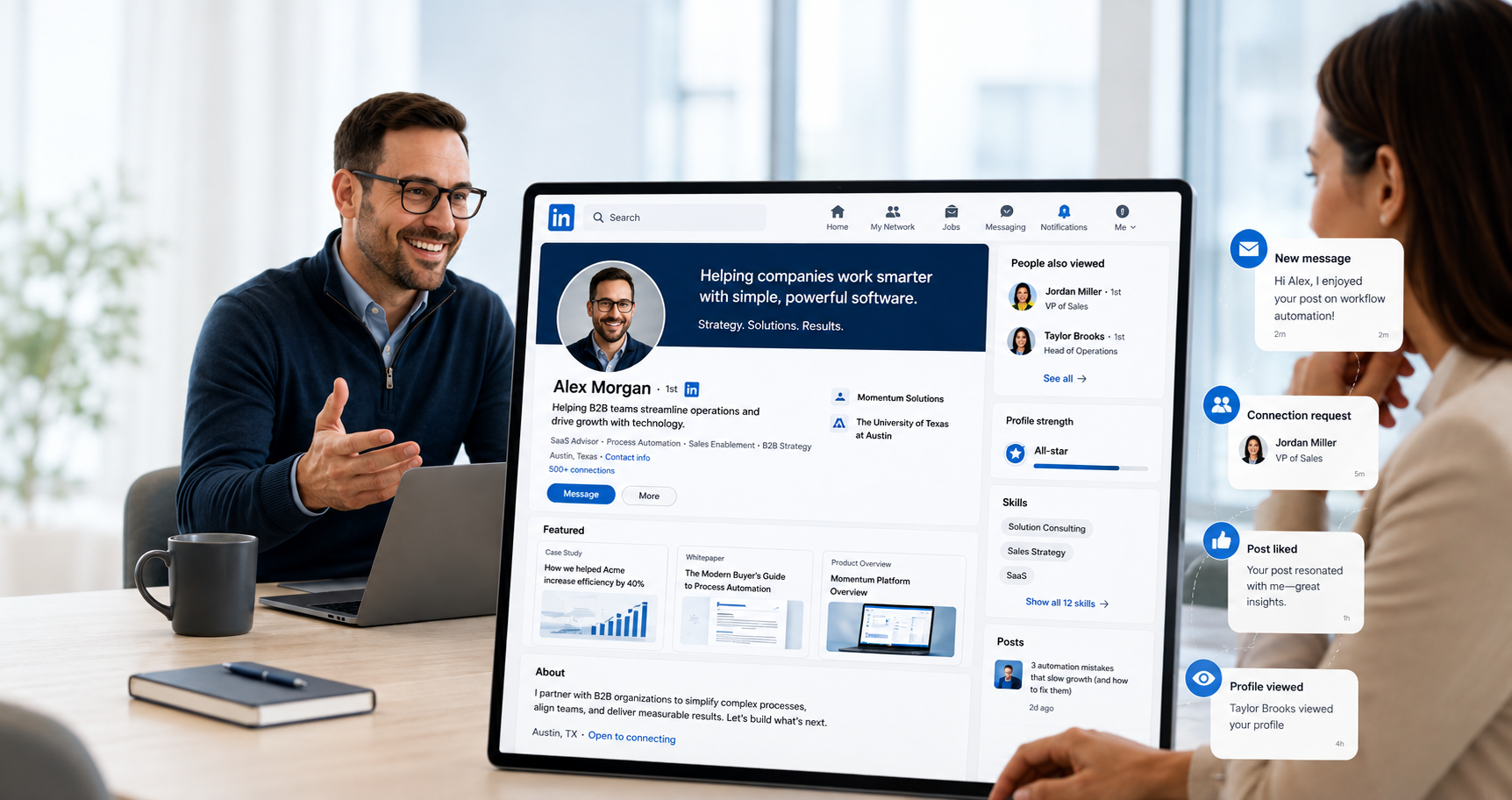
- LinkedIn articles
- YouTube videos and descriptions
- Podcasts and show notes
- Local council or chamber websites
- Community pages
- Trade association websites
- Customer reviews
Not every mention will help equally.
A genuine recommendation in a respected industry article is likely to be much more valuable than a business name placed on a poor-quality website containing thousands of unrelated listings.
Context matters.
Suggested Reading: 17 Pros Offer Tips to Create a Killer Website Fueled by Content
Why backlinks still matter
Before declaring brand mentions the “new backlink,” we need to be clear about one thing:
Backlinks are not dead.
Google’s own documentation says it uses links as a signal when deciding the relevance of pages. Links also help Google discover pages and understand how different pages relate to one another.
Google’s guide to its ranking systems confirms that PageRank continues to be part of its core systems, although the way it works has changed a great deal since Google first launched.
Sources:
- Google: Link best practices
- Google: A guide to Google Search ranking systems
- Google: SEO Starter Guide
A useful backlink can do several jobs at once.
It can:
- Help Google discover your page
- Send real visitors to your website
- Add credibility to a claim
- Connect your business with a topic
- Connect your business with a location
- Strengthen the authority of a page
- Help search engines understand what your website is about
Imagine that a respected Lancaster, Pennsylvania home improvement website publishes an article about choosing an electrician. It names your electrical company, describes the work you do and links to your website.
The name provides the brand mention.
The surrounding words provide context.
The link gives readers and search engines a direct path to your website.
That combination remains very powerful.
Why brand mentions are becoming more important
Traditional search engines were built around pages, keywords and links.
Modern search and AI systems are also becoming much better at understanding entities.
An entity is a recognisable thing, such as:
- A person
- A business
- A product
- A place
- An organisation
- A service
- An event
Your business is an entity.
Search systems try to understand what your business does, where it operates, who is connected to it and whether it can be trusted.
A clear brand mention can help make those connections.
For example, imagine a business is repeatedly mentioned online using phrases such as:
- John’s Electric Lancaster
- Lancaster electrician
- Commercial electrical services
- Residential electrical work
- Registered electricians in Lancaster
- Emergency electrical repairs
Even when every mention does not include a link, the repeated association between the company, its services and its location may help machines understand the business more clearly.
However, we should be careful not to overstate this.
Google has not published a simple rule saying:
One unlinked brand mention is worth a certain number of backlinks.
Search systems are far more complicated than that.
There is also an old Google patent that discusses “implied links.” In the patent, an implied link can be a reference to a resource without a clickable link.
This is interesting evidence that search engineers have explored ways to understand non-clickable references.
However, a patent is not proof that Google currently uses a method in its live ranking system.
Source:
The safest conclusion is not that every brand mention passes “link juice.”
The better conclusion is that search engines are able to understand much more than clickable links alone.
Suggested Reading: How Local Businesses Can Use AI (With Humans in the Loop) to Beat Bigger Competitors
AI search changes the value of being mentioned
In traditional search, the goal was often to rank your website.
In AI search, the goal may be to have your business included in the answer.
That is a major change.
Someone asking an AI platform for “the best landscapers in York” may receive a written list of companies. The user might not click any websites before choosing which businesses to contact.
If your company is named in that answer, the mention itself has value.
You have gained visibility even if there is no traditional website visit.
AI platforms often gather information from multiple sources. Depending on the platform and the question, those sources might include:
- Your website
- Review websites
- Business directories
- News articles
- Industry publications
- Comparison pages
- Forums
- Social content
- Videos
- Public databases
Microsoft has even introduced AI citation reporting in Bing Webmaster Tools. It allows website owners to see when pages from their sites are cited in AI-generated answers across supported Microsoft experiences.
That is a clear sign that search visibility is expanding beyond the traditional list of ranked links.
Source:
Google also says that established SEO practices remain relevant to its generative AI search features. These features are still connected to Google’s wider search and quality systems.
Source:
This means businesses should not abandon SEO in favor of a few AI tricks.
They should build a strong, trusted and well-supported presence across the web.
A mention is useful, but a recommendation is better
Not all brand mentions send the same message.
Compare these examples:
Smith Plumbing is a plumbing company in Wellington.
After comparing availability, services and customer feedback, we selected Smith Plumbing as one of Wellington’s strongest options for urgent residential plumbing work.
Both name the company.
The second mention gives much more useful information.
It connects the business with:
- Wellington
- Residential plumbing
- Urgent work
- Customer feedback
- A positive recommendation
This type of context can help a person understand why the company is relevant. It may also provide clearer information for a search engine or AI system.
A negative mention can create the opposite effect.
If your brand is often discussed in connection with poor service, misleading pricing or unanswered complaints, increased mention volume will not necessarily help you.
The goal is not simply to make your name appear everywhere.
The goal is to create accurate, positive and relevant mentions.
Third-party mentions may carry more weight than your own claims
Every business can say it is excellent.
That does not make the claim believable.
A third party saying it is excellent can be much more convincing.
Consider the difference:
We are the most trusted building inspection company in Tauranga.
Compared with:
Building Surveying Services was recommended by local buyers for its detailed pre-purchase building reports.
The first statement comes from the business.
The second comes from someone else.
That independent support is one reason reviews, media articles, industry lists and genuine recommendations are so useful.
Google’s local ranking guidance says prominence is partly based on how well known a business is. Its published examples include links and reviews. It also states that more reviews and positive ratings can help a business’s local ranking.
Source:
This does not mean that any random mention will improve your rankings.
It does show that information found outside your own website forms part of the wider picture Google builds around a business.
AI recommendation systems face a similar problem.
If an AI tool needs to recommend a business, it needs evidence. A company’s own sales page provides one point of view. Independent articles, directories, reviews and discussions provide extra confirmation.
Backlinks and brand mentions perform different jobs
It is helpful to stop treating this as a contest.
Backlinks and brand mentions are not identical.
A backlink can:
- Give search engines a direct path to your website
- Help a page get discovered
- Send referral traffic
- Provide context through its anchor text
- Contribute to link-based authority signals
- Lead a potential customer directly to a useful page
A brand mention can:
- Increase awareness
- Connect your brand with a service or topic
- Connect your business with a location
- Support entity recognition
- Influence how people talk about your business
- Give AI systems more information about your reputation
- Place your business inside third-party recommendations
- Create branded searches later
The strongest result is usually a quality mention that also includes a useful link.
If you can earn both, take both.
Can an unlinked mention help SEO?
The honest answer is: possibly, but not in the same clear way as a good backlink.
An unlinked mention can still create business value.
A person may read your name in an article and then:
- Search for your company on Google
- Type your web address directly
- Look for your Google Business Profile
- Read your reviews
- Follow your social account
- Ask an AI tool about your business
- Contact you several days later
Normal analytics may not connect that customer to the original mention.
This is similar to advertising. Someone can see an advertisement, remember the company and search for it later. The advertisement influenced the sale even though the final visit appears to be direct or organic traffic.
Brand mentions can work in the same way.
Google Search Console allows website owners to see which searches generate impressions and clicks. This can help you monitor whether more people are searching for your business name over time.
Source:
You can also ask new customers:
How did you first hear about us?
That simple question often reveals marketing activity that analytics software misses.
What research tells us about generative search
Research into Generative Engine Optimization, commonly called GEO, is still developing.
One widely discussed study tested ways of improving content visibility inside generative search answers. It found that adding useful citations, relevant quotations and statistics could improve the visibility of content in its tests.
This does not prove that one method will work across every AI platform or every search.
It does support a broader lesson:
Content that is clear, well-supported and easy to reference gives AI systems better material to work with.
Source:
This matters for brand mentions too.
A vague mention gives a machine very little information.
A specific, evidence-based mention gives it much more.
For example:
Masterscape is an Auckland landscaping company.
That is useful.
But this is better:
Masterscape provides residential landscape design and construction across Auckland, including planting, outdoor living areas and full garden transformations.
The second version explains the entity more clearly.
It answers three questions:
- Who is the business?
- What does it do?
- Where does it operate?
Suggested Reading: When Content Becomes Noise: Creating Work People Notice and Remember
What makes a strong brand mention?
A useful brand mention normally has several of the following features.
1. It appears on a relevant website
A mortgage adviser mentioned on a respected property website makes sense.
The same adviser mentioned on an unrelated overseas coupon website may have little value.
2. It includes the correct business name
Name consistency makes it easier for people and machines to recognise that each mention refers to the same business.
3. It explains what the business does
A name by itself provides limited context.
A name beside a service, product or area of expertise is much more useful.
4. It includes the correct location
This is especially important for local businesses.
A mention connecting your business to Lancaster, Philadelphia, Harrisburg, or Reading can make the reference more relevant to local searches.
5. It comes from an independent source
A recommendation from a customer, journalist, association or industry expert can provide evidence beyond the claims on your own website.
6. It includes supporting detail
Reviews, examples, prices, qualifications, case studies and real experiences make a mention more meaningful.
7. It includes a link where appropriate
Even if the brand mention itself has value, a link gives readers an easy way to visit your website. It can also provide traditional SEO benefits.
8. It is genuine
A real mention written for real readers is safer and more valuable than a large number of artificial mentions created only to manipulate search results.
Google warns against link spam and other tactics designed to manipulate its systems. That includes attempts to manipulate generative AI responses in Google Search.
Source:
How to earn more valuable brand mentions
The best mentions are usually earned by doing something worth mentioning.
That does not always require a huge public relations budget.
Create useful original information
Publish something other websites can refer to.
This could be:
- A local price guide
- An original survey
- A yearly industry report
- A calculator
- A checklist
- Local market data
- A detailed case study
- A clear answer to a difficult question
- Expert comments on an industry change
A useful resource gives writers and publishers a reason to name your business.
Contribute expert comments
Journalists, bloggers, podcasters and newsletter writers need knowledgeable people who can explain a topic clearly.
Provide a short, useful answer without turning it into an advertisement.
If your advice is good, the publisher may mention your name, business and website.
Join relevant organizations
Local chambers of commerce, trade associations and professional groups often have member profiles.
These can provide trusted mentions, business details and sometimes backlinks.
Seek inclusion in genuine comparison articles
Being named in a useful “best of” or comparison article can put your brand directly in front of people who are close to making a decision.
The article should have a real selection method. A list created only to praise one company is less convincing.
Encourage detailed customer reviews
Instead of asking customers for a “five-star review,” ask them to describe:
- What service they needed
- What problem was solved
- Where the work was completed
- What they valued about the experience
Never tell customers exactly what to write.
Natural, specific reviews are more believable.
Appear on podcasts and videos
Podcast appearances can create mentions in the episode, title, description and show notes.
Videos can create additional brand associations through titles, descriptions, transcripts and comments.
Support local events and organizations
Sponsorships, community projects, sports clubs and charity work can lead to strong local mentions.
Choose real partnerships that suit the business. Do not support an organisation only to demand a link.
Reclaim unlinked mentions
If a website has already mentioned your business, it may be reasonable to ask whether it can add a link.
Make the request helpful and low-pressure.
For example:
Thanks for mentioning our research in your article. Would you mind linking the company name to the original report? That would make it easier for readers to view the full information.
This can turn an existing mention into both a mention and a backlink.
Avoid the new version of link spam
As brand mentions grow in importance, poor-quality “mention building” services will grow too.
Be careful with offers promising:
- Hundreds of mentions in a few days
- Guaranteed inclusion in AI answers
- Fake Reddit discussions
- Made-up customer reviews
- Mass-produced press releases
- Automated forum posts
- Fake expert profiles
- Thousands of low-quality directory listings
These tactics miss the point.
The value is not simply in the number of times your name appears.
The value comes from the quality, relevance, accuracy and independence of those appearances.
Ten useful mentions from trusted sources can be far more valuable than 1,000 artificial mentions on websites nobody reads.
How should you measure brand mentions?
There is no perfect brand-mention score.
Use several measures together.
Track the number of relevant mentions
Monitor where your business is named and whether those mentions are positive, neutral or negative.
Track branded searches
Check whether searches for your business name, product names or key people are increasing.
Google Search Console can help with this.
Track referral traffic
When a mention includes a link, check whether visitors are using it.
Remember that referral traffic is only part of the picture. Some people will search for your brand later.
Track review growth
Monitor the number, quality and detail of reviews across the platforms that matter in your industry.
Track enquiry sources
Ask customers where they first heard about the business.
Do not rely only on the last click recorded by your analytics platform.
Test AI visibility
Regularly check whether your business appears in relevant AI recommendations.
Use several realistic questions and several AI platforms. Answers can change depending on the exact wording, location, user context and date.
Do not treat one AI answer as a permanent ranking.
So, are brand mentions the new backlink?
Not exactly.
Backlinks remain important because they help search engines discover pages, understand relationships and evaluate relevance.
Brand mentions do something slightly different.
They help create the wider story of your business:
- Who you are
- What you do
- Where you operate
- What you are known for
- Who recommends you
- Whether your claims are supported elsewhere
That story matters to customers.
It matters to traditional search engines.
It may also matter when AI tools decide which businesses, products or experts to include in an answer.
The old goal was to get more websites linking to you.
The new goal is broader:
You want trusted sources to know about you, talk about you, recommend you and, where useful, link to you.
A backlink without context can be weak.
A mention without a link can still create awareness and trust.
A strong, relevant recommendation that includes both your brand and a link is usually the best outcome.
Final thoughts
Brand mentions are not the new backlink.
They are the other half of the picture.
Backlinks help connect the web.
Brand mentions help explain what those connections mean.
As search moves towards direct answers, recommendations and AI-generated summaries, businesses need to become more than easy to find.
They need to become easy to recognise, easy to understand and easy to recommend.
That means building a consistent presence across your website, reviews, directories, articles, videos, podcasts, social platforms and community connections.
Do not stop earning good backlinks.
Start paying much more attention to where your brand is mentioned, what is said about it and whether those mentions clearly connect your business with the services and locations you want to be known for.
In the next stage of search, the winning business may not be the one with the largest backlink count.
It may be the business that the wider web understands and trusts.

Corey is the Founder of Good Oil Marketing. He specializing in helping business grow using SEO and Google Ads.




One Response
What a helpful guide, Corey.
Getting brand mentions on aligned sights is just as powerful as nabbing quality backlinks. This is especially the case for rock-solid recommendations as you mentioned. AI changed the game in this regard. Why would anyone resist the core AI summary at the top of Google? I feel like these sound highly professional. But as you noted, we need to publish truly helpful content consistently to nail down any brand mention, let alone from a respected blogger within our niche.
The more helpful content you publish to your blog and to targeted offsite sources the better. Be creative. Get connected. Brand mentions flow organically to prolific bloggers engaged in authentic outreach.