
For years, the blog post has been the backbone of content marketing.
You picked a topic, wrote 1,600 careful words, hit publish, and let Google bring readers to you.
That still matters. But on its own, it has stopped pulling its weight. In Orbit Media’s 2026 survey of more than 1,000 content marketers, just 14% said their blog delivers strong results, the lowest number in the survey’s history. Their verdict: “Too many content programs are just blogs.” Lots of text, very little video.
Meanwhile, for many of your future customers, a blog post is no longer the first thing they see from you. Before they ever search, they’re scrolling. They might:
- watch a 30-second Reel about a problem they didn’t know had a fix
- find a TikTok that answers the question they were about to Google
- see a LinkedIn video from someone in their industry
- watch three YouTube Shorts from the same expert, back to back
None of that requires reading your blog.
So is short-form video replacing the blog post?
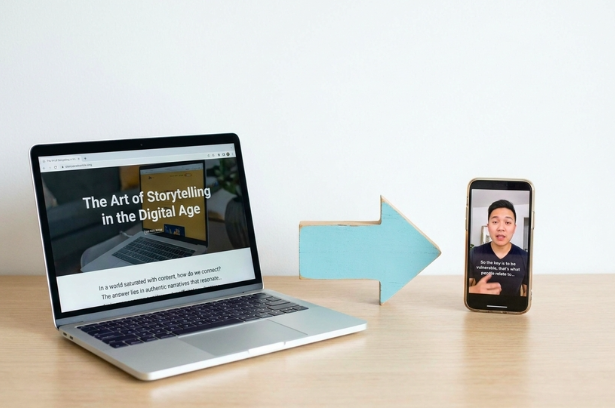
No. But it’s increasingly how people meet you before they ever read one.
A blog post proves you’re good at what you do. A short video helps close the gap between being good and being known. That’s what short-form video marketing does best for small brands.
And if you already write blog posts, you’ve done the hard part. Every post you’ve published is a handful of short videos waiting to be made.
Table of Contents
What Is Short-Form Content (and Why It Works for Small Brands)?
Short-form content is anything you can take in within 30 to 60 seconds: the clip that makes you laugh, teaches you one trick or changes how you see something, right before you scroll to the next one. It’s easy to watch and just as easy to forget. In practice, that usually means vertical video: TikToks, Instagram Reels, YouTube Shorts and, increasingly, LinkedIn’s vertical videos. Carousels and short text posts belong to the same family, but this guide focuses on video, because that’s where attention has moved.
The clearest sign is how people say they want to learn. In Wyzowl’s 2026 State of Video Marketing survey, 63% of consumers said a short video is how they’d most like to learn about a product or service. Text-based articles came in at 12%.
Read that twice if you run a blog. For every person who would rather read your article, roughly five would rather watch a short video about the same idea.
Short-form video works especially well for small brands, freelancers and solo founders for three reasons:
- Anyone can go viral. Short-form feeds show videos based on how viewers react to them, not on who posted them. A brand-new account with a sharp idea can reach thousands of strangers with its first post. A brand-new blog, by contrast, sits unread until Google decides to rank it, which can take months.
- Organic converts incredibly well. Nobody was targeted or interrupted. People chose to watch you explain something, so by the time they visit your profile, they already know how you think and whether you know your stuff. Video is persuasive on its own, too: in the same Wyzowl survey, 85% of people said a video had convinced them to buy a product or service.
- It’s cheap and quick to make. A phone, a window and clear audio are enough. And when the script comes from a post you’ve already written, a 30-to-60-second video takes minutes to plan.
Why Your Blog Is the Best Raw Material for Short-Form Video
The hardest part of short-form video is knowing what to say.
Those who give up on video rarely run out of time. They become inconsistent. They run out of ideas, or they ramble because they never decided on the point before hitting record.
A good blog post has already solved that problem: the thinking is done. The average post is now around 1,300 words, according to Orbit Media, and a post that long usually holds five to ten distinct ideas. That’s five to ten potential TikToks.
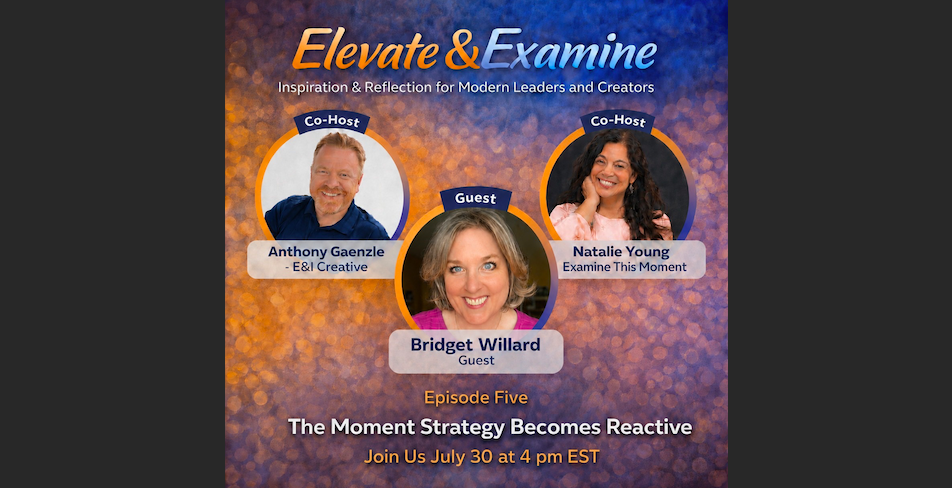
Those videos also reach people your blog never will. On E&I’s Elevate & Examine podcast, guest A. Lee Judge made the case that content should show up in the format the audience prefers, not the one the creator finds easiest to make. If your audience scrolls more than it reads, your best ideas belong in their feed, not only on your blog.
Suggested Reading: Why Great Businesses Still Struggle With Content Marketing (And How to Fix It)
The Anatomy of a Successful Short-Form Video
Before turning anything into video, it helps to know what a good TikTok or Instagram Reel is made of. Most short-form videos that hold attention follow the same four-part structure, whether they run 30 seconds or 60.
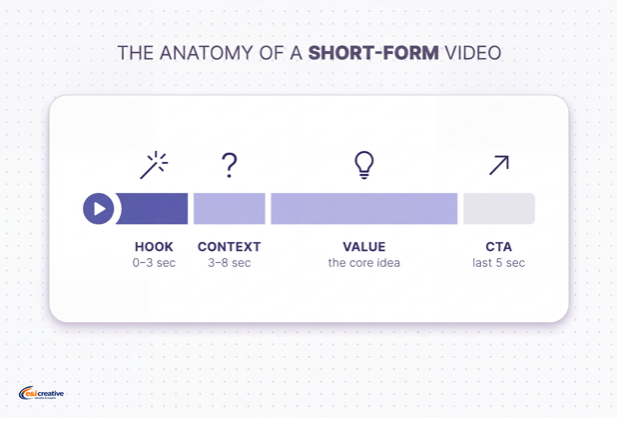
- Hook (first 1 to 3 seconds). The line that stops the scroll: a bold claim, a surprising result, a question the viewer has asked themselves, or the end result shown first. No greetings, no logo intro, no “In this video I’ll…”
- Context (the next few seconds). Why this matters to the viewer, in one sentence. It turns curiosity into a reason to keep watching.
- Value (the body). The one idea, delivered fast: a tip, a few steps, an example or a before-and-after. Cut every pause, and change something on screen every few seconds, whether that’s a new angle, a caption or a visual.
- CTA (the last few seconds). One clear next step. For a business, the most useful one is usually the link in your account bio, which can send viewers back to the full blog post or straight to your services, such as a booking page or contact form. Pick one. Ask for three things and viewers do none of them.
Two rules hold the structure together. First, one idea per video. If a second point shows up, that’s your next video. Second, keep it short enough to finish. In Wyzowl’s survey, 71% of marketers said videos between 30 seconds and 2 minutes are the most effective, and a single idea fits comfortably in 30 to 60 seconds.
How to Turn a Blog Post Into Short-Form Videos:
A 6-Step Framework
With that structure in mind, here’s how to get there from a blog post. One post can become five to seven short videos in an afternoon, and the framework works the same whether the blog is yours or a client’s.

Step 1: Pick blog posts that have already proven themselves
Not every post deserves a video. Start with the ones your audience has already voted for: your most-visited pages.
Step 2: Pull out 5 to 7 hooks
Read the post with one question in mind: what would make someone stop scrolling? Look for:
- a surprising number or result
- a common mistake a reader is probably making right now
- an opinion that goes against the usual advice
- a before-and-after
- a question your clients ask all the time
Write each one as a single sentence that makes sense with zero context. That sentence is your hook, and each hook is one video.
Then check what already works in your niche. Search your topic on TikTok and YouTube, open the top results and note their first spoken lines. You’ll quickly see which framings your audience responds to. A free profile analyzer (e.g. this TikTok profile analyzer) speeds this up by showing any account’s top-performing videos at a glance.
Step 3: Script 30 to 60 seconds per idea
Turn each hook into a script using the four-part structure above. For a single idea from a blog post, 30 to 60 seconds is usually plenty, and most of the material is already in the post:
- Hook: the one-sentence idea from step 2.
- Context: one line on why it matters, often lifted from the post’s introduction.
- Value: the explanation or example from that section of the post, cut down to its core.
- CTA: point viewers to the link in your bio, which can lead back to the full post or straight to your services.
Write the way you talk. If a sentence would sound odd said out loud, rewrite it.
Step 4: Record simply
You don’t need a studio. Face a window, use your phone’s back camera if you can, and find a quiet room. Film vertically (9:16). Record each script two or three times and keep the most natural take. If you’re comfortable with it, show your face. It builds trust quickly.
Step 5: Edit for the scroll
- Cut every pause and filler word at the start. The first second should already carry the hook.
- Add captions. They help anyone watching without sound and keep everyone else focused on your words.
- Put the hook on screen as text for the first few seconds.
Step 6: Publish natively and connect it back to the post
Upload the video file directly to each platform instead of posting a link to it from somewhere else. Write a fresh caption for each one. Then close the loop: embed or link the videos in the original blog post, and point viewers to the post for the full version.
Example: a real short-form video, broken down
Here’s a real TikTok from a freelance video editor, lightly trimmed. It follows the four parts almost exactly:
- Hook: “How do you get your first client when you have zero portfolio?”
- Context: “I had the same problem. I applied everywhere, on Fiverr and in Facebook groups, and nobody replied. I thought my editing wasn’t good enough. But that wasn’t the problem.”
- Value: “Here’s what I did instead. I found three small creators on Instagram whose edits looked rough and checked if they had a YouTube channel. I picked one of their videos, cut a 30-second clip and edited it myself. Then I sent it with a simple email. No pitch, no rate. Two of them replied, and one asked how much I’d charge. That became my first client. And even if nobody replies, you now have new edits for your portfolio.”
- CTA: “This is only one technique I use to get clients. If you want more, tap the link in my profile.”
Each part does one job: the hook names a problem the viewer already has, the context makes it personal, and the value delivers a single tactic with a result.
Now look at it as a blogger would. The whole video is a single section of a post you could title “How to Get Your First Freelance Client Without a Portfolio.” The other sections of that post, such as pricing your first project or writing the outreach email, are the next videos.
Choosing Your Short-Form Video Platforms
Once you have a few videos, the next question is where to post them. Start with one main platform and one secondary platform, chosen by where your buyers already spend time. Anthony makes the same case in How to Choose the Right Channels to Grow Your Personal Brand: focus first, expand once something works.
Here’s how the four main short-form video platforms compare for a small business or solo brand:
- YouTube Shorts: best for evergreen how-to and educational clips. Shorts average more than 200 billion views a day, according to YouTube CEO Neal Mohan. In Wyzowl’s survey, YouTube is the platform marketers use most for video (82%) and rate most effective (69%).
- LinkedIn video: best for B2B, consultants and freelancers who sell to companies. LinkedIn reported video uploads up 36% year over year, with video created on the platform itself up 100%, and rolled out a full-screen vertical video feed. 70% of marketers already use it for video.
- Instagram Reels: best for personal brands, local businesses and behind-the-scenes content. 69% of marketers use Instagram for video, and 56% rate it effective.
- TikTok: best for reaching new audiences quickly, younger buyers and playful formats. Only 40% of marketers use it for video, so fewer businesses compete for attention there. But only 29% call it effective, so test before you commit.
Because all four favor vertical video, one recording can serve several platforms. Just adapt the caption and on-screen text to each platform instead of posting the identical file everywhere.
Final Thoughts
Turning your blog into short-form video comes down to a simple habit: take one idea from a post, give it a hook, and put it where your audience already spends its time.
If being on camera is what’s holding you back, you can still do this. A voiceover on top of a screen recording, your hands working through an example, or clear on-screen text over footage of your work can carry the same idea. Plenty of accounts grow without ever showing a face. What viewers come back for is a useful idea, explained clearly, in a voice they start to recognize.
So start small. Pick your most-visited post this week, pull five hooks from it, and film one video for the platform where your buyers spend the most time. Then do it again next week.
A month from now, you’ll have a handful of videos, real data on which ideas land, and a much better sense of what to write next.

David Galusinski is the founder of creafico, a competitor analysis tool for short-form creators.