
AI is here to stay.
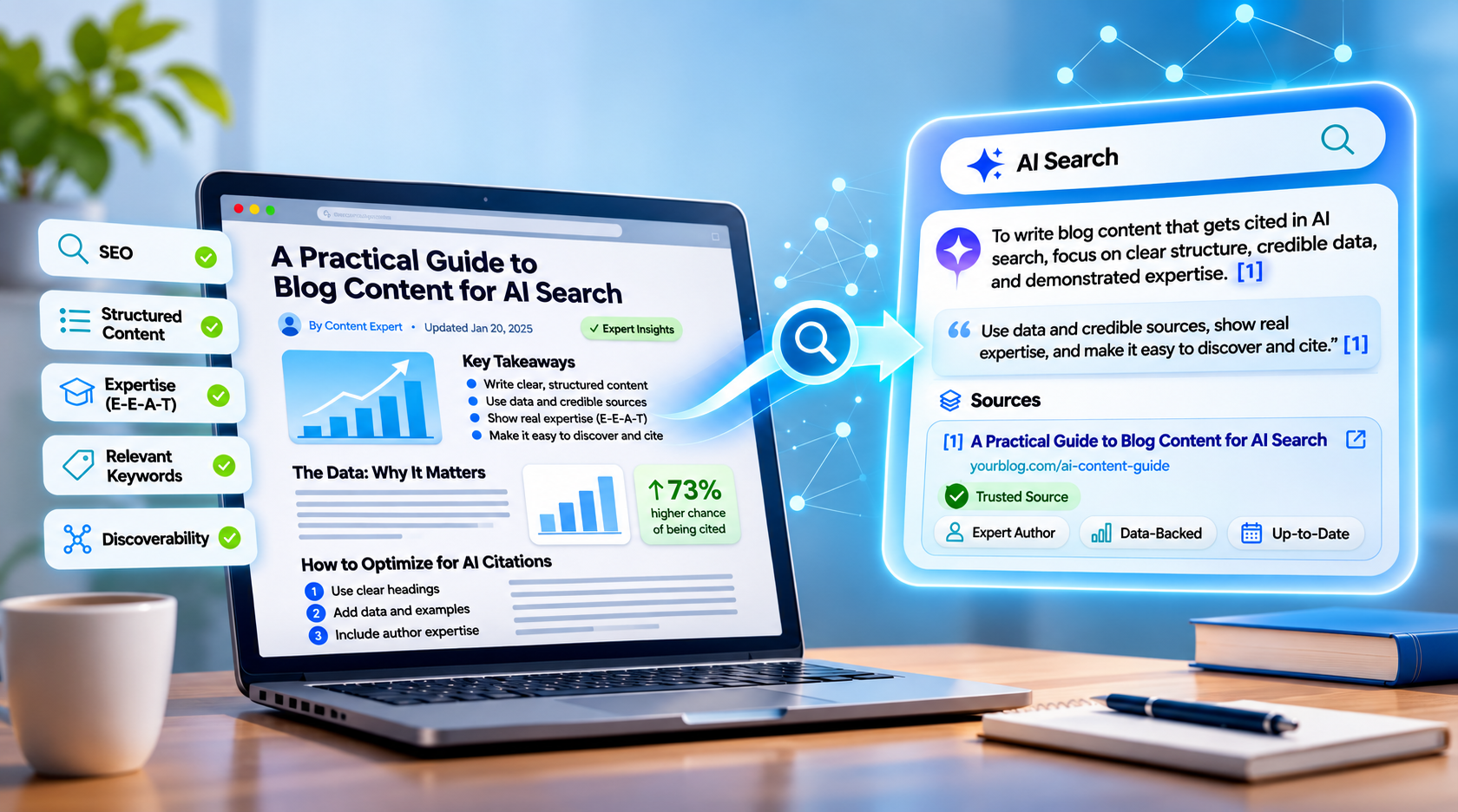
Bloggers can benefit from artificial intelligence by landing coveted AI citations.
Artificial intelligence cites sources to back up its claims.
This relatively recent trend is one part Wild West and one Part 49’er Gold Mine.
As is always the case with Google, no one really knows the set rules as the Big G keeps things close to the vest.
Yet noting a few patterns through careful trial and error scores sweet AI citation traffic.
Smart bloggers position themselves to be cited consistently.
Table of Contents
My Experience with AI Citations
If you need any convincing, my AI citations jumped the moment I followed the below steps.
Here’s the kicker; I rarely optimize my blog posts for traditional SEO.
Minus publishing practical, long form blog posts I looked past all the technical details most adhere to in order to reach page one of Google.
Related Article: How Artificial Intelligence Can Give Your Content Marketing Team Superpowers
Why Would You Want Your Blog to Get Cited by AI?
Citations are featured prominently.
Gone are the days of relying on classic organic search alone to drive Google traffic.
Query any term on your phone. The AI Overview extends to a breakdown backed up with cited sources.
Skilled optimizers can land multiple citations for fairly competitive keywords.
My blog, Blogging From Paradise (hardly an SEO resource), got cited for a competitive “blogger review” search beside some of the top SEO blogs in the world.
A heavy volume of aspiring bloggers query to get the lowdown on the free blogging resource offered by Google (known as Blogspot in some circles).
If my blog gets cited, you definitely want to ride this wave.
Capitalize on this trend.
Follow these tips closely to drive traffic through AI citations.
Cover One Topic
AI search seeks trusted topical authorities.
I’ve no doubts that my citations grew because I only covered the blogging tips niche since 2014.
Blogs are full resources.
Build a proven track record by consistently doing one thing to do it well.
Publish posts on one topic. Stick to your niche.
Cover your topic inside-out from various angles. Be the expert in that field.
Publish posts for the long haul to prove your authority. Whether through AI citations or the classic algorithm, Google needs to know you’ve been around the blogging block to score page 1 traffic.
Be the go-to guy or gal in your niche.
Be a master of one trade to increase AI citations.
Choose Clear Titles
Select clear titles to send the proper message to artificial intelligence search.
Ironically, AI search cuts through smoke and mirrors sometimes used by manipulative bloggers. Something artificial detects artificial-sounding content and looks past it.
Imagine yourself communicating with a robot.
Be direct.
Look no further than the title for this post:
How to Optimize Your Content to Get Cited by AI
AI needs clear communication to understand the content.
Be direct. Add no colorful words or phrases.
Be as literal as possible to get cited by AI.
Related Article: Why Being Closed-Minded Hurts Your Blogging Career
Write FAQ Style
Whittling down posts from the typical 1200 words of storytelling into FAQ style posts took some mental gymnastics on my part.
Consider the line from the Dragnet reboot with Dan Akroyd and Tom Hanks:
“Just the facts, ma’am.”

Share the bare minimum. List the facts. Step readers from problem to solution.
Add no filler. Keep personal references to a minimum.
Give readers what each needs to know and nothing more.
Strip everything extraneous. Never beat around the bush.
AI search favors straight-laced content because the citing process is scientific compared to the more seemingly lenient algorithm.
Share only the necessary steps to get the job done.
Publish Shorter and Sweeter
Note that I did not advise you to publish short and sweet content.
Short-form blog posts do not typically get cited.
AI search needs meat on the blogging bone.
Word count numbers vary, but my 700- 1000-word posts generate most of my blog’s AI citations.
4000-word posts no longer cut the Google mustard.
Travel bloggers who used to publish epic guides need to change their tune.
AI is not interested in how much you know.
Optimizing for AI search depends on how well you can completely answer questions in as few words as possible.
Share the facts and nothing more.
Beware of shortchanging readers in the process.
Scoring citations still involves publishing long-form content; just a shorter version, though.
Be thorough enough to answer questions but discerning enough to communicate effectively with artificial intelligence.
Find that balance to land citations.
Update Old Content to Follow AI Citation Rules
I feel like this is the most underrated step to follow.
Bloggers optimize new posts to get cited by AI.
But AI may look past blogs filled with wordy, bloated posts.
Slowly optimize old posts for citations.
Follow the prior steps.
Blogs serve as a full body of work, not a collection of standalone posts.
Conclusion
AI will only become more common in day-to-day life going forward.
Optimizing content for AI citations matters more than tailoring posts for the traditional algorithm.
Be thorough yet direct.
Get your blog cited by AI by sticking to the evolving fundamentals as we watch this trend grow.

Ryan Biddulph is the founder of Blogging From Paradise where he helps you grow your blog and become a professional blogger.